Suspension upgrades are some of the most popular and beneficial modifications that can be done to the GEN5 Camaro. Enthusiasts are always looking to get an edge, whether at the drag strip or on a road course.
Common upgrades include Larger Sway Bars, Lowering Springs, Urethane Bushings, Control Arms and various Chassis Braces. After the installation of most of these items a 4-wheel alignment is necessary. The factory alignment specifications are to achieve the best tire wear, not performance handling. By making some adjustments to the alignment better handling can be achieved.
Camber
Camber is the angle of the wheel, measured in degrees, when viewed from the front of the vehicle. If the top of the tire is leaning outward that is positive camber. When the tire is leaning inward that is negative camber. Excessive positive or negative camber will cause outer tire wear.
Caster
Caster is the angle of the steering pivot measured in degrees, when viewed from the side of the vehicle. If the top of the pivot is leaning toward the rear of the car, then the caster is positive. If it is leaning toward the front, it is negative. Caster has a greater affect on handling than tire wear. Excessive negative caster will cause the steering to be light and difficult to keep in a straight line. Excessive positive caster will cause the steering to feel heavy and the steering wheel may kick if you hit a bump.
Toe
Toe measurement is the difference in the distance between the front of the tires and the back of the tires. It is measured in fractions of an inch and is usually set close to zero. This means that the wheels are parallel with each other. Toe-in means that the fronts of the tires are closer to each other than the rears. Toe-out is just the opposite. Excessive toe will cause rapid tire wear.
Thrust Angle
Thrust angle is the direction that the rear wheels are pointing in relation to the center line of the vehicle. If the thrust angle is not zero, then the vehicle will “dog track” and the steering wheel will not be centered. A common cause of this is a differential housing not centered on the leak springs. The front toe can be compensated to so the steering wheel can be centered.
Steering Center
Steering center is set so the steering wheel is centered when the vehicle is traveling down a straight and level road.
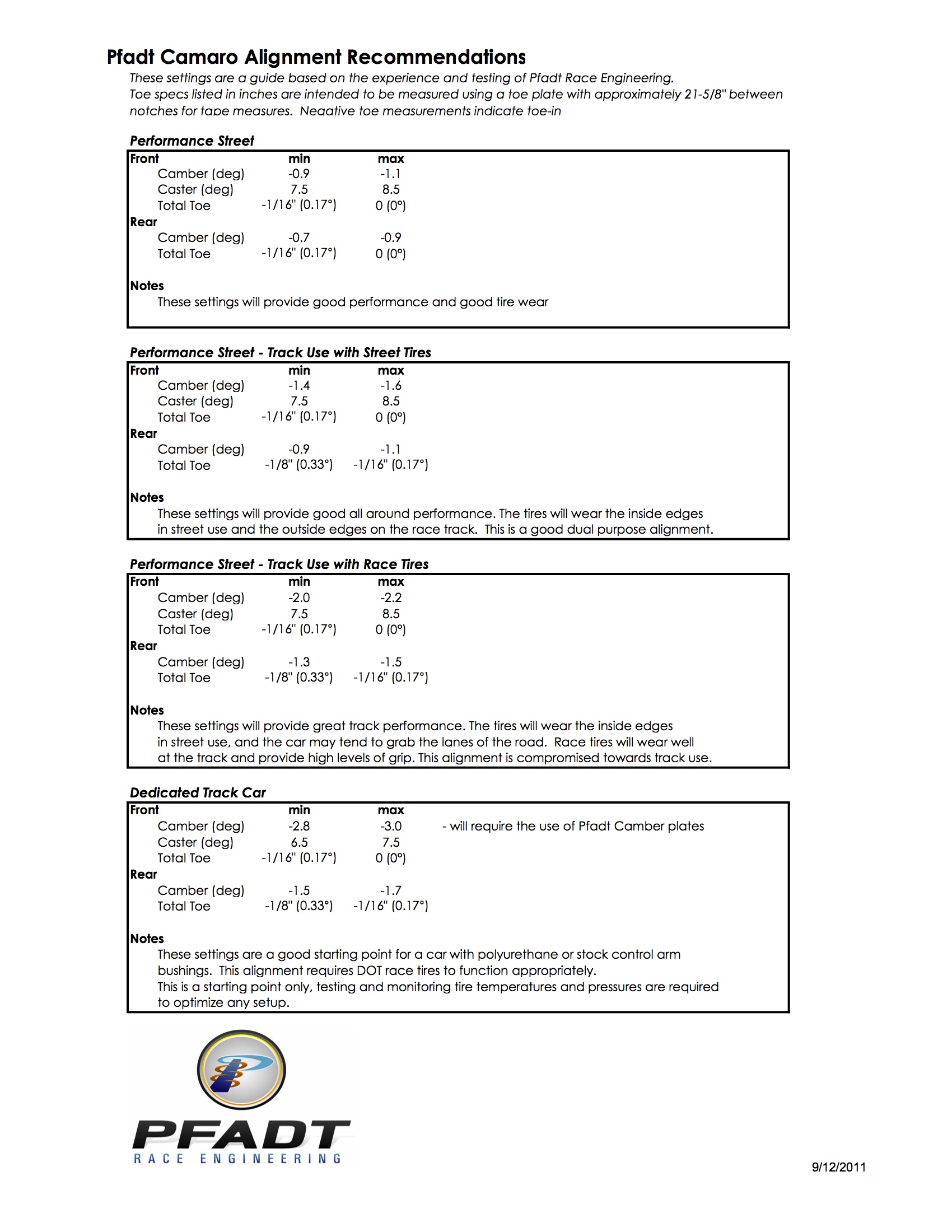
Below are recommended alignment specifications from PFADT Race Engineering: